
Compared to spring, attitude towards marriage equality has become more positive. In May, 55 per cent of the population agreed that marriage equality guarantees the same rights and obligations for all people. By September, this percentage had increased to 59.
Attitude towards the transition to learning in the Estonian language remains stable. In May, 76 per cent, and in September, 74 per cent of the population thought that the transition to Estonian-language education offers all children living in Estonia an equal opportunity to acquire high-quality Estonian-language education. 88% of Estonians agree with the statement, but there are slightly fewer people who agree (45%) than disagree (51%) among residents of other nationalities.
People support the upcoming tax changes less than before. In May, 50 per cent of the population thought that changes in state taxes were necessary. In September, the corresponding indicator has dropped to 43 per cent. The attitudes of Estonians have changed – 60 per cent of Estonians considered tax changes necessary in May and 51 per cent in September. Among residents of other nationalities, 24 per cent consider tax changes necessary.
The attitude towards tax changes in the age group 50–64 is more negative than average, and North-East Estonia stands out among the regions.
Trust in the government and the Riigikogu has decreased. The share of residents who trust the government has decreased by nine per cent compared to May – it has dropped from 48 to 39. The percentage of residents who trust the Riigikogu fell by thirteen per cent – from 45 to 32. The percentage of people who trust the president has not changed significantly (72 per cent in May and 69 per cent in September), but the percentage of those who gave the highest rating (complete trust) has decreased from 34 per cent to 24 per cent for this institution as well.
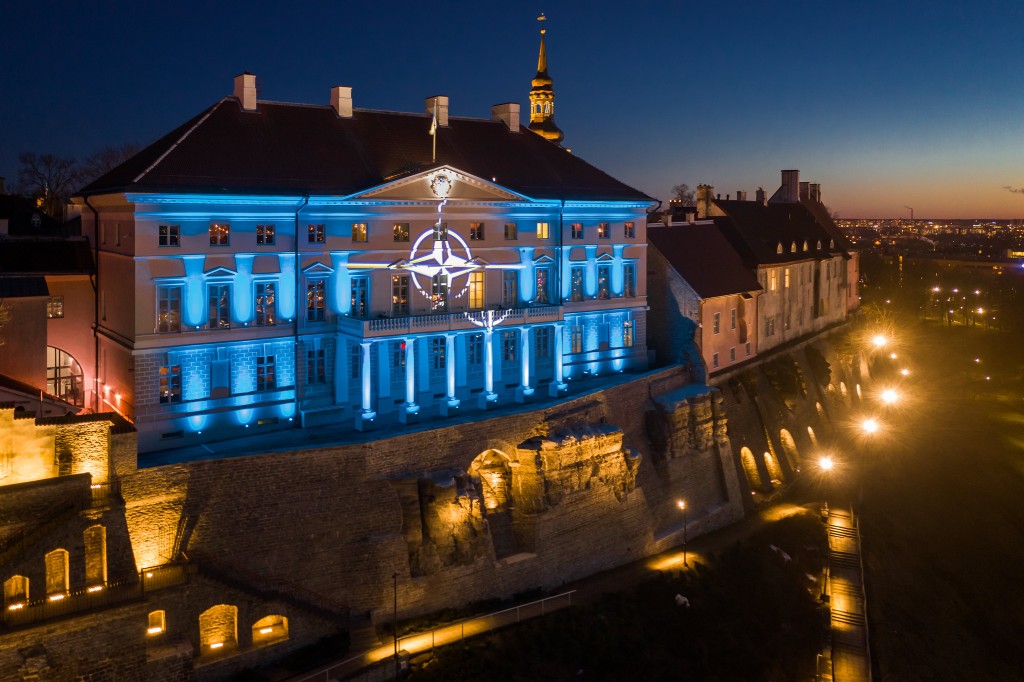
The support of people of other nationalities for NATO membership is growing
Membership in NATO is supported by 79 per cent of the population (78 per cent in May). Among Estonians, support for our membership in NATO has remained stable (generally between 91–94 per cent), but among residents of other nationalities, support has risen to the highest level in recent years – to 53 per cent (previously, it was below 50 per cent). Among residents of other nationalities, support for NATO membership has doubled compared to the beginning of 2022.
Support for Ukraine continues to be high – 83 per cent of residents condemn the military activities of Russia in Ukraine (13 per cent of Estonian residents have no opinion and four per cent support the actions of Russia). However, the support of Estonian people for helping Ukraine, including accepting war refugees, has somewhat decreased.
In the first half of 2023, the percentage of residents supporting the acceptance of Ukrainian war refugees was in the range of 66–74 per cent. In September, however, the corresponding figure had dropped to 60. Support for accepting refugees has decreased especially among Estonians. In the first half of 2023, 74–82 per cent of Estonians supported accepting refugees. In September, the corresponding figure had dropped to 66 per cent. Among residents of other nationalities, support for accepting refugees in the first half of 2023 ranged from 48 to 56 per cent. In September, 46 per cent of residents of other nationalities supported accepting refugees.
Overall satisfaction has not changed
Although the general sense of security of residents increased in May, the sense of security had decreased again by September. In September, 56 per cent of the population thought that Estonia can feel safe at the moment (61 per cent in May and 55 per cent in March). 72 per cent of residents feel safe living in Estonia (75 per cent in May and 68 per cent in March).
The level of general satisfaction of residents has not changed. In May, 72 per cent of the population was satisfied with life, and in September, 71 per cent. Economic well-being and confidence have also remained at the same level and did not decrease in anticipation of winter and the heating season – the proportion of residents experiencing financial difficulties was 26 per cent in May and 24 per cent in September. 48 per cent of residents felt economic insecurity in May and 46 per cent in September.
The Government Office, together with Turu-uuringute AS, regularly conducts public opinion surveys to map the attitudes of residents on various important topics in society and their trust in state institutions.
The target group of the survey is people aged 15 and older living in Estonia. Among the respondents, men and women from different regions of Estonia of different nationalities, different ages, and with different educational levels and incomes are proportionally represented.
1,510 people took part in the survey conducted in September online and by phone.
See the results of the study in more detail on the website of the government: https://www.riigikantselei.ee/uuringud

