
Canvas plafond "Triumph of Aphrodite/Venus"
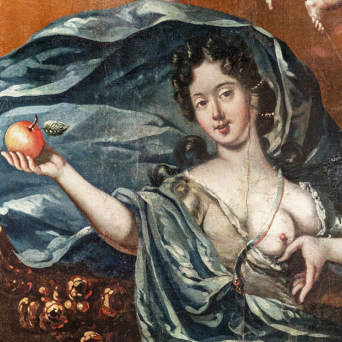
Composition
The square-shaped ceiling painting is designed with a strong sense of symmetry. At its centre is a figurative cartouche, complemented by roundels with putti in the corners. These elements are linked by an intricate ornamental design that creates the illusion of three-dimensional stucco decoration.
The central cartouche, with its softly rounded corners, is framed by an egg-and-dart moulding and an acanthus frieze. A narrower acanthus frieze surrounds the roundels and other painted areas. Laurel-leaf friezes run between the central field and the roundels, as well as along the edges of the painting. Painted in shades of grey, these friezes imitate sculpted white relief, while red decorative ribbons add colour and visual interest.
The cut corners of the central field feature olive branches and palm leaves set against a yellow background. Surrounding lunettes display mascarons intertwined with acanthus scrolls on a deep red ground. Rectangular panels along the sides show bundles of arms on a light red background. The most elaborate acanthus ornament, enriched with playful putti, appears in the panels with a blue background.
A sense of depth is created through the careful use of light and shadow. The composition is designed so that the light appears to fall from above the centre, enhancing the painting’s three-dimensional effect.
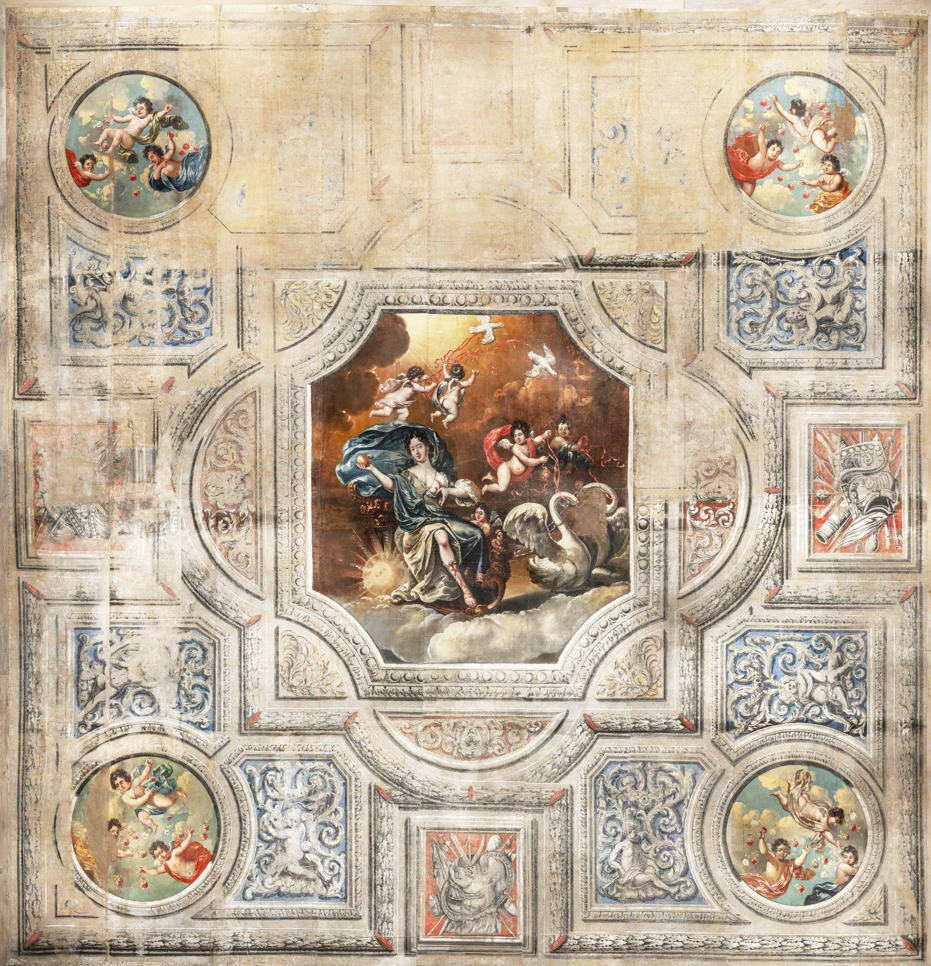
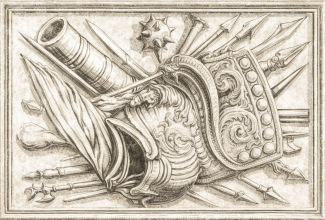
Bundles of Arms
Predominantly battle standards, weapons, and other items of military equipment captured as spoils of war.
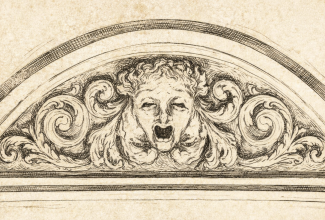
Lunettes
The four deep red lunette panels are decorated with mascarons.
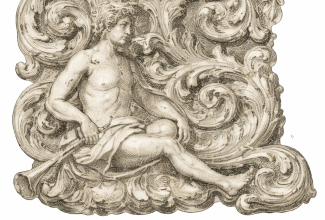
Arabesques
Eight arabesques with putti are arranged on a dark blue ground.
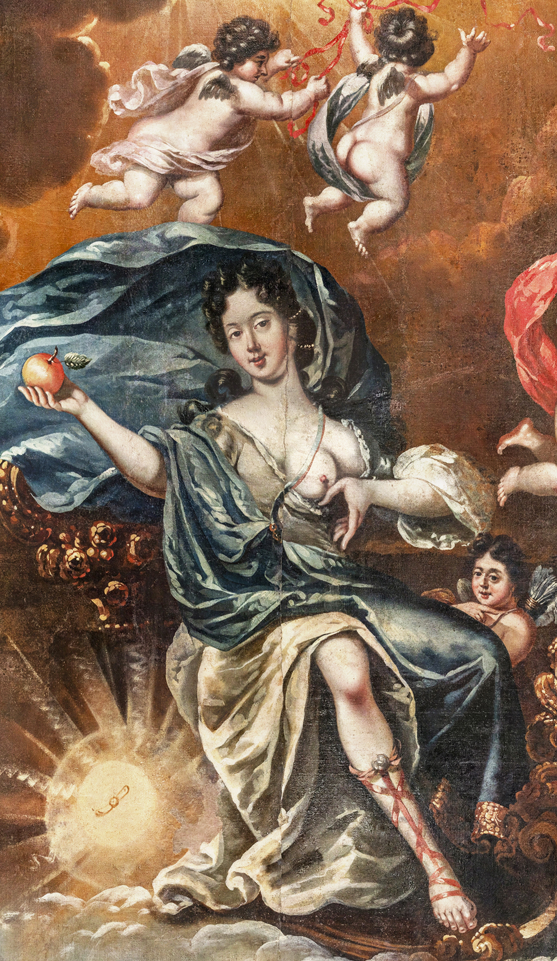
Narrative
The ancient Greek hero Peleus was ordered by Zeus to marry the sea nymph Thetis. A magnificent wedding was held, attended by all the gods of Olympus—except the goddess of discord, Eris. Offended by her exclusion, Eris threw a golden apple among the guests, inscribed “To the fairest.”
Three goddesses claimed the apple: Hera, Athena, and Aphrodite. Zeus chose a mortal to judge the dispute—Paris, a Trojan shepherd and the king’s son. Each goddess offered him a reward. Athena promised victory in war, Hera offered royal power, and Aphrodite promised love and the most beautiful woman in the world, Helen. Paris chose Aphrodite.
Helen was already married to Menelaus, king of Sparta. When Paris later took Helen to Troy, war became inevitable. The Greek forces united and launched a campaign against the city, beginning the Trojan War, which lasted ten years.
Gods and mortals alike were drawn into the conflict. Great heroes fell, and Troy was ultimately destroyed through the ruse of the wooden horse. The city was burned, its people killed or enslaved. A war that began with a promise of love ended in destruction, serving as a lasting warning about pride, fate, and the whims of the gods.
Restoration
To remove the plafond painting, a 19th-century mirrored ceiling was dismantled and five beams added in the 18th century were taken down. In the conservation studio, up to five layers of limewash were carefully removed from the painting.
Cleaning the oil-painted areas was relatively straightforward, while the distemper-painted ornament required much more delicate treatment. The canvas was cleaned, damaged areas were repaired, and both the canvas and paint layers were stabilised. Creases and stretched areas were then pressed flat.
The figurative scenes, painted in oil, were exceptionally well preserved and needed only minimal retouching. Small losses were discreetly filled to restore visual unity, while a few larger repared areas were left visible. In the distemper-painted sections, the ornament was gently enhanced with light washes, without reconstructing missing details.
The final stage involved joining the nine canvas panels and mounting them on a specially designed frame. A spring system allows the more than 300-year-old canvas to adapt to indoor climate changes, removing almost all creases. The fully mounted ceiling painting weighs approximately 200 kg.
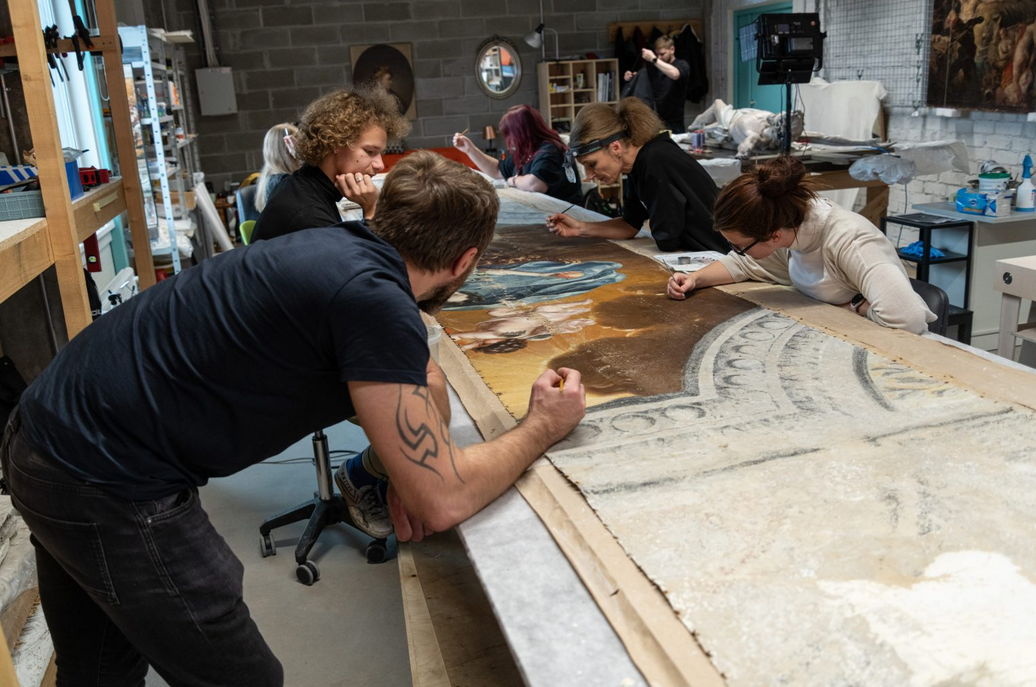
Conservation team: Hilkka Hiiop, Varje Õunapuu, Taavi Tiidor, Edgar Umblia, Kaisa Milksaar, Liis-Marel Aak, Johanna Lamp, Siiri Pank, Hannes Vinnal.
Further reading
Venuse triumf. H. Hiiop, K. Milsaar, A. Randla, H. Vinnal. Eesti Kunstiakadeemia, 2025
Hilkka Hiiop. Rüütelkonna hoone laest leitud haruldase plafoonmaalingu restaureerimisest – Kuku pärastlõuna, 14.09.2024
Hilkka Hiiop: rüütelkonna hoonest leitud plafoonmaaling on väga haruldane – ERR, 30.03.2024
Kultuuris kuum: Rüütelkonna hoones tuli unikaalse põranda alt välja veel unikaalsem laemaal – Postimees, 17.02.2024
Hilkka Hiiopi loeng “Leid Eestimaa rüütelkonna hoonest: Eesti suurim barokiajastu plafoonmaaling” – Narva Muuseum, 17.10.2023
Rüütelkonna hoone renoveerimisel leiti suur plafoonmaaling – ERR, 12.09.2023